
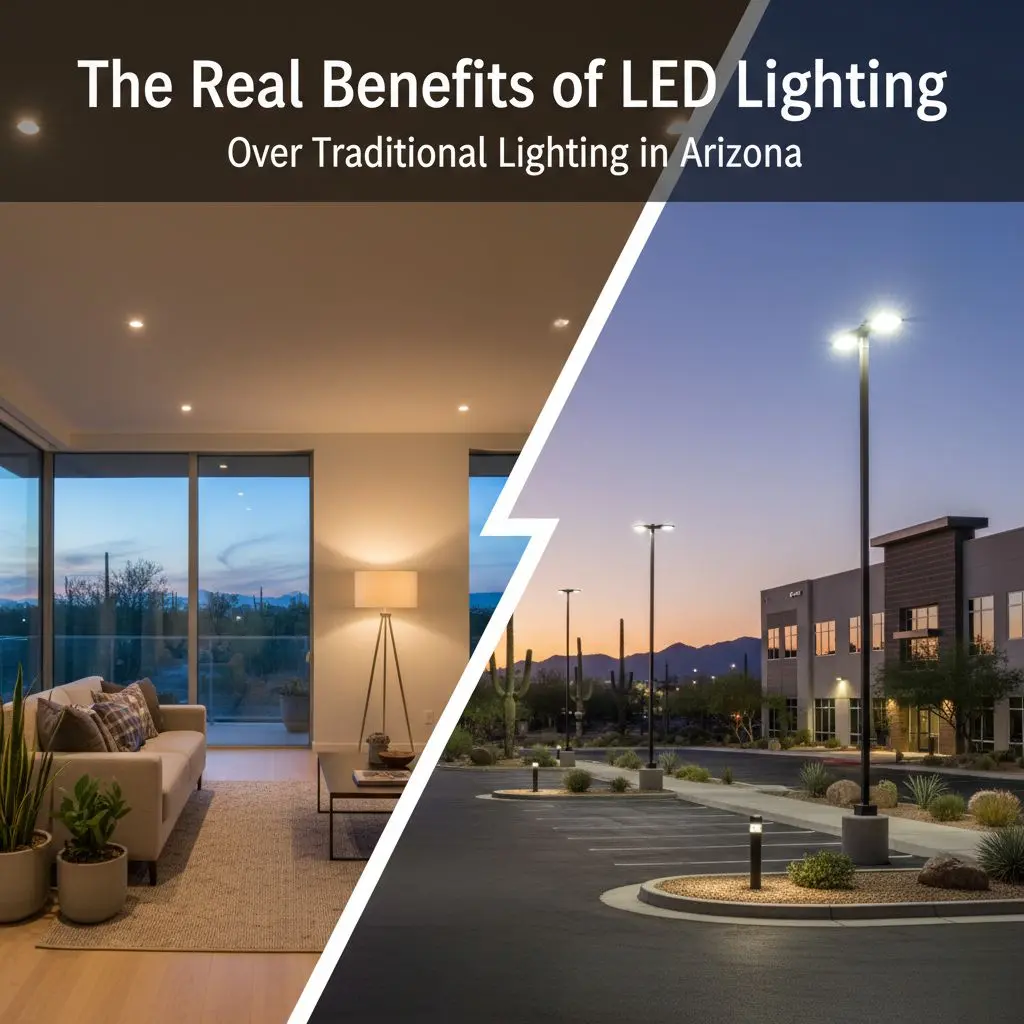
Lighting technology has come a long way in the last few decades. In homes, offices, and even outdoor spaces across Arizona, LED lights have quickly become the preferred choice over older incandescent and fluorescent bulbs. What began as a small innovation in electronics has evolved into a global standard for energy efficiency and sustainability.
In this article, we’ll explore the real advantages of LED lighting—what makes it so efficient, how it compares to traditional options, what drawbacks to consider, and why it’s such a smart investment for Arizona residents and businesses alike.
Understanding LED Lighting
Before diving into the benefits, it helps to know what LED actually means. LED stands for Light Emitting Diode. Instead of heating a filament (like in incandescent bulbs) or exciting gases (like in fluorescents), LEDs produce light through a semiconductor process. When an electrical current passes through the diode, electrons emit light—efficiently and without wasted heat.
This technology allows LEDs to be compact, durable, and remarkably long-lasting. Unlike older bulbs, LEDs don’t rely on fragile glass envelopes or filaments that burn out over time. Instead, they deliver reliable illumination with minimal energy loss.
Why Arizona Is Switching to LED Lighting
Arizona’s climate and energy conditions make LED lighting especially beneficial. High daytime temperatures, long daylight hours, and heavy air-conditioning use mean that energy efficiency isn’t just a preference—it’s a necessity.
Traditional bulbs waste much of their energy as heat, which adds unnecessary warmth to indoor spaces. In a state where keeping cool is already a major energy expense, switching to LED can have a measurable impact on electricity bills and comfort levels.
Key Advantages of LED Lighting
The benefits of LED lighting go far beyond energy savings. Below are the most impactful reasons Arizonans are making the switch, supported by data and real-world examples from lighting industry experts.
1. Dramatic Energy Efficiency
One of the most recognized benefits of LEDs is their efficiency. LEDs use up to 90% less energy than incandescent bulbs and about 60% less than fluorescents.
For a household or business in Arizona, this translates directly to lower monthly electric bills. For example, replacing ten 60-watt incandescent bulbs with 10-watt LED equivalents can save hundreds of kilowatt-hours each year—enough to noticeably reduce summer electricity costs.
The reason LEDs are so efficient comes down to how they create light. Nearly all the energy they draw becomes visible light, while traditional bulbs lose most of it as heat. Less energy wasted as heat means more light per watt—and less strain on your HVAC system.
2. Exceptionally Long Lifespan
LED lights are built to last. Most high-quality models have rated lifespans between 25,000 and 50,000 hours, and some industrial LEDs reach 100,000 hours under ideal conditions. Compare that to incandescent bulbs that last only 1,000 to 2,000 hours, or compact fluorescents that typically last 8,000 to 10,000 hours.
That longevity means fewer replacements, less waste, and reduced maintenance. In Arizona, where outdoor fixtures are exposed to dust and extreme heat, the long lifespan of LEDs also minimizes trips up ladders and service calls.
A simple example: a porch or driveway light that runs eight hours each night could last 17 years before needing replacement.
3. Lower Heat Emission
Traditional light sources convert much of their energy into heat. Incandescent bulbs can reach over 400°F at their surface. LEDs, on the other hand, remain cool to the touch because they emit very little heat.
For Arizona homes, this isn’t just a safety perk—it’s an energy advantage. Every watt of heat emitted by a light bulb eventually contributes to indoor warmth, forcing air conditioners to work harder. By switching to cooler-running LED fixtures, households can indirectly cut cooling costs and reduce HVAC load during peak summer months.
4. Superior Durability and Safety
LEDs are solid-state devices, meaning they don’t rely on glass bulbs or delicate filaments. This makes them resistant to vibration, shock, and temperature swings—important qualities in desert regions where outdoor fixtures face harsh sunlight and occasional monsoon winds.
From a safety perspective, LEDs are mercury-free (unlike fluorescent lamps) and generate minimal ultraviolet or infrared radiation. They’re safer to handle, easier to recycle, and pose less environmental risk when discarded.
5. Flexibility and Design Versatility
The compact size of LEDs allows for remarkable design flexibility. They can be arranged in panels, strips, recessed fixtures, or architectural accents, fitting seamlessly into any space—from minimalist kitchens in Scottsdale to large-scale commercial warehouses in Phoenix.
LEDs also allow full control over color temperature and brightness. Whether you prefer the warm, cozy glow of a 2700K bulb or the crisp daylight tone of 5000K, there’s an LED option available. Some advanced models even let users adjust brightness and color through smartphone apps or smart-home systems, a popular feature among Arizona’s growing number of solar-powered smart homes.
6. Better Light Quality and Color Rendering
High-quality LEDs provide excellent Color Rendering Index (CRI) performance, meaning they show colors more accurately compared to older lighting. This is particularly valuable for spaces like retail stores, art studios, or living rooms where color clarity matters.
Unlike fluorescents, which often produce a harsh or flickering light, LEDs illuminate spaces evenly and comfortably, reducing eye strain and enhancing the look of interiors.
7. Environmentally Friendly Lighting Choice
LED technology supports Arizona’s growing sustainability movement. With no mercury, no toxic gases, and far longer lifespans, LEDs reduce waste and pollution at every stage—from production to disposal.
Their efficiency also contributes to lower carbon emissions. The U.S. Department of Energy estimates that widespread adoption of LED lighting could save hundreds of terawatt-hours of electricity annually, equivalent to the output of dozens of power plants.
For a desert state that values resource conservation and solar integration, LEDs fit perfectly into long-term environmental goals.
8. Instant Light—No Warm-Up Time
Unlike compact fluorescents that take time to reach full brightness, LEDs illuminate instantly. This feature is ideal for outdoor areas, garages, and motion-sensor lighting where immediate light is essential for safety and convenience.
In Arizona neighborhoods where property owners rely on security lighting, that instant-on capability ensures full visibility the moment it’s needed—no flicker, no delay.
9. Works Great with Solar and Smart Systems
LED lights are natively DC (direct current) devices, making them a perfect match for solar energy systems, which also produce DC power. SEPCO and other experts note that LEDs integrate easily with solar panels and batteries, reducing conversion losses and maximizing off-grid performance.
In regions like Tucson or Yuma—where sunlight is abundant—pairing LEDs with solar lighting can drastically reduce dependence on grid power while maintaining bright, consistent illumination.
Smart-home compatibility is another win. Many LED systems now include Wi-Fi or Bluetooth control, enabling homeowners to adjust lighting remotely, schedule brightness, or automate outdoor lighting for energy efficiency.
10. Lower Long-Term Cost of Ownership
It’s true that LED bulbs generally cost more upfront than incandescent or halogen bulbs. But that initial investment quickly pays for itself.
When you factor in energy savings, reduced replacement frequency, and lower maintenance costs, LEDs almost always deliver a better total cost of ownership. A typical LED bulb can save hundreds of dollars over its lifetime compared to traditional lighting.
For commercial facilities, warehouses, or municipalities, those savings multiply across hundreds or thousands of fixtures, leading to substantial operational cost reductions.
The Drawbacks of LED Lighting
While LED technology is overwhelmingly positive, no product is without limitations. Understanding the potential downsides helps buyers make informed decisions and choose the right products for their needs.
1. Higher Initial Purchase Price
Although prices have dropped significantly, quality LEDs still cost more upfront than old-fashioned bulbs. For large-scale retrofits, that initial expense can seem steep. However, because the lifespan is so long and the power consumption so low, most users recover that cost within the first few years through energy savings alone.
2. Blue Light and Eye Strain
Some LEDs—especially cool white or daylight versions—emit a higher proportion of blue light. Excessive blue light exposure late at night can interfere with sleep patterns or cause mild eye strain.
To avoid this, homeowners should choose warm white bulbs (around 2700K–3000K) for bedrooms and living areas, reserving cooler tones for task lighting and outdoor use.
3. Dimming and Compatibility Issues
Not every LED is designed to work with existing dimmer switches. Using an incompatible dimmer can cause flickering or limited dimming range.
To fix this, look for “dimmable” LEDs specifically rated for your fixture type, and consider upgrading to LED-compatible dimmer switches. Many manufacturers now include compatibility charts to simplify the selection process.
4. Quality Variation Among Brands
The LED market has grown rapidly, and not all products are created equal. Low-quality imports may have poor color rendering, inconsistent brightness, or shorter lifespans.
When shopping, look for reputable brands that specify CRI ratings, lumens, and warranty coverage. ENERGY STAR certification or DLC listing is another sign of reliability.
5. Directional Light May Not Suit Every Fixture
LEDs emit light in a specific direction rather than all around like incandescent bulbs. This makes them efficient for task or spot lighting but sometimes less ideal for decorative fixtures that rely on even, omnidirectional illumination.
In those cases, using diffuser lenses or LED bulbs designed for 360° coverage solves the issue easily.
LED Lighting in Arizona Homes and Businesses
Arizona homeowners are increasingly integrating LEDs into both indoor and outdoor environments:
- Homes: Kitchens, living rooms, and patios benefit from cooler operation and better color control.
- Businesses: Offices, stores, and warehouses enjoy lower utility bills and reduced maintenance downtime.
- Municipalities: Cities like Phoenix and Mesa have already replaced thousands of streetlights with LED fixtures, cutting power consumption by more than half.
Because LED technology performs well even in high temperatures, it’s especially suited to Arizona’s hot summers. The low heat emission also means fewer insect problems outdoors—another small but appreciated benefit in desert environments.
How to Transition to LED Lighting Effectively
Switching to LED doesn’t have to happen all at once. Many Arizona homeowners take a gradual approach:
- Start with high-use areas. Replace bulbs in places where lights are on the longest—kitchens, hallways, and outdoor fixtures.
- Choose the right color temperature. Warm white (2700K) creates a cozy ambiance; daylight (5000K) enhances task visibility.
- Check dimmer compatibility. If flicker occurs, replace or update dimmers.
- Compare lumens, not watts. Lumens measure brightness—choose LED replacements that provide equivalent light output to your old bulbs.
- Buy quality. Stick with brands offering warranties of at least three years and ENERGY STAR labels.
These simple steps ensure maximum efficiency and longevity from your new lighting system.
The Future of Lighting in Arizona
As energy costs rise and sustainability takes center stage, LEDs will continue to dominate the lighting landscape. Their integration with solar systems, smart-home controls, and battery storage makes them the most versatile option available.
The technology continues to evolve, too—newer models now offer tunable white light (adjustable warmth throughout the day), motion sensitivity, and advanced thermal management that extends lifespan even further in hot climates.
For Arizona homeowners, businesses, and municipalities, the long-term payoff of LED lighting is clear: lower bills, better light, and a smaller environmental footprint.
Final Thoughts
Switching to LED lighting is more than an upgrade—it’s a practical investment in comfort, sustainability, and cost savings. Whether you’re replacing a single lamp or planning a full retrofit across a commercial property, the benefits are consistent: longer life, lower energy use, safer operation, and better control.
In a sun-drenched state like Arizona, where efficiency and heat management are everyday concerns, LED lighting simply makes sense. It’s the bright choice for the future of illumination.