
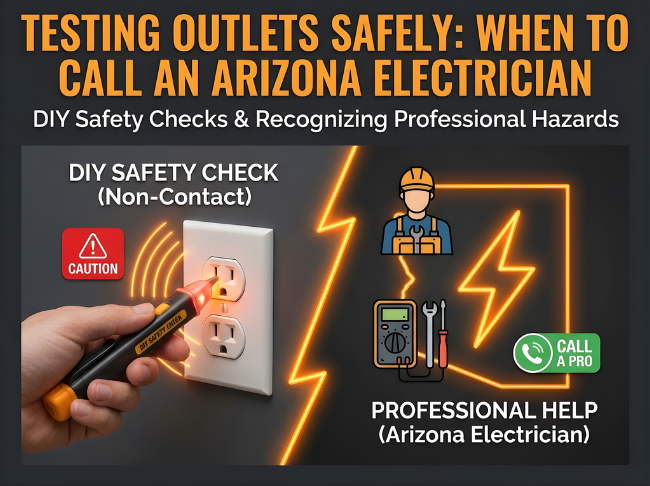
Queen Creek homeowners test outlets regularly to catch issues before they spark trouble in this fast-growing Arizona town. Simple checks using basic tools reveal problems like faulty wiring or overloads common in older homes near Vineyard or newer builds in Silverhawk. Knowing limits keeps families safe while spotting when pros step in to prevent shocks or fires during monsoon season.
Outlets handle heavy daily loads from chargers, appliances, and holiday lights, wearing down over time in desert dust and heat. Safe testing starts with visual scans and plug-in testers, but deeper faults demand electrician expertise to avoid risks hidden behind plates. Local codes require GFCI and AFCI protection in kitchens, bathrooms, and garages, making improper tests void warranties or insurance.
Start with Visual and Basic Safety Checks
Look for scorch marks, buzzing sounds, or warm faces on outlets, signs of arcing that ignites drywall fast. Cracked covers or loose plates signal vibrations loosening wires inside, a top fire cause in block homes. In Queen Creek’s 110-degree summers, outlets near AC units sweat corrosion, turning contacts green and unreliable.
Unplug everything before touching, and never test barefoot on tile floors that conduct shocks. Use outlets away from water sources first, as humidity amplifies current paths through sinks or patios. These steps take seconds but spot 70 percent of surface issues without tools.
Tools for Safe Outlet Testing at Home
Grab a $10 three-light receptacle tester from hardware stores; it plugs straight in, glowing to show correct wiring, open grounds, or reversed polarity. Green means good, red flags problems like hot-neutral swaps energizing grounds. These detect 80 percent of common faults without opening boxes.
Non-contact voltage testers beep near live wires, confirming power off before swaps. Multimeters measure voltage at 120 volts steady, not fluctuating wildly from loose neutrals. Outlet analyzers check GFCI trip times under 25 milliseconds, vital for pool areas.
Test monthly, especially post-storms when surges fry internals. Log results to track patterns, like bedroom outlets failing under fan loads.
Reading Tester Results and Common Faults
Open ground lights up when earth wires break, leaving shocks possible through metal appliances. Reversed polarity swaps hot and black leads, confusing switches and risking constant power on grounds. Noisy outlets buzz from loose strands arcing at thousands of degrees inside walls.
GFCI testers press buttons to simulate faults; slow trips mean bad sensors failing real leaks. AFCI outlets detect arcs from frayed cords but false-trip on dimmers if miswired. Queen Creek homes chain outlets daisy-style, so one bad link drops whole runs.
When Outlet Testing Reveals Deeper Problems
Frequent trips point to overloads exceeding 15 or 20 amps, like space heaters on fridge circuits. Voltage below 110 volts browns motors over time, signaling undersized wires from original builds. Multiple outlets failing together trace to shared breakers or main panel neutrals oxidizing.
Sparks during plugs indicate corroded slots needing full replacement, not just cleaning. Warmth over 95 degrees Fahrenheit measured by finger test shows resistance building to fire. These demand immediate pro calls, as probing risks 120-volt grips locking muscles.
Task 1: GFCI Outlets in Wet Areas Failing Tests
Kitchen counters and bathrooms mandate GFCI since 1987 codes, tripping on 5 milliamp leaks to ground. Testers show no trip or reverse feed, meaning water paths stay live. Desert hard water minerals coat internals, slowing response until shocks hit.
DIY resets flip buttons temporarily, but root causes like moisture-wicking Romex need sealed boxes. Pros swap weather-tight covers and verify daisy-chain wiring, preventing 30 percent of home shocks here.
Task 2: Voltage Fluctuations Across Multiple Outlets
Lights dim when vacuums run, dropping below 115 volts from long runs or loose lugs. Queen Creek’s distant substations stretch feeders, amplifying drops in 100-amp panels. Multimeters confirm, but fixes involve torqueing breakers to 25 inch-pounds and balancing loads.
Amateurs miss phase imbalances frying compressors. Electricians load-test circuits, adding subpanels for garages.
Task 3: Dead Outlets with Power Elsewhere
Backstab connections loosen on 14-gauge wires, killing downstream outlets silently. Testers show open hot or ground, but walls hide nicks from rodents common in irrigated yards. Infrared cameras spot cold spots from breaks.
Opening boxes risks shorts; pros use tone generators to trace without demolition.
Task 4: USB or Smart Outlets Not Charging Properly
Modern outlets with USB ports draw steady 5 volts, but faulty transformers hum or overheat. App-controlled ones lose WiFi from neutral shortages in older homes. Voltage sags under phone loads signal circuit strain.
Replacements need AFCI-compatible models; mismatches trip protectors constantly.
Task 5: Outdoor Outlets Tripping in Rain
Weatherproof covers hood plugs, but inlets corrode from monsoon splashes. GFCI test buttons fail wet, passing phantom current until someone touches faucets. UV degrades plastic, cracking seals yearly.
Pros install in-use bubble covers and THWN pigtails rated 90C wet.
Signs It’s Time to Call Queen Creek Electricians
Breakers pop repeatedly despite low loads, or outlets smell like burning plastic. Flickering accompanies appliances, or shocks tingle through tools. Post-lightning tests show surges; annual checks catch creep.
Pros arrive with megger testers measuring insulation at 1000 volts, spotting pinholes. They torque every connection, scan thermally for hotspots, and update directories.
Local teams know Pinal inspectors, pulling permits for panel work tied to outlets. Costs start at $100 diagnostics, $200 swaps, saving $5,000 fires.
Conclusion
Testing outlets safely starts simple but quickly shows when electrician skills protect Queen Creek homes from hidden dangers. From GFCI fails to voltage drops, these signs demand pros for code-compliant fixes that last. Schedule checks yearly and act fast on warnings, ensuring outlets power families reliably without risk. Safe testing today prevents emergencies tomorrow.