If your home or business is experiencing frequent breaker trips, flickering lights, or you’re planning to add high-demand appliances like an EV charger or heat pump, it may be time to consider an electrical panel upgrade. While often overlooked, your electrical panel is the heart of your building’s electrical system, distributing power safely and efficiently throughout your property. Upgrading your panel is not only a safety measure but also a way to future-proof your home or business for modern energy demands.
In this article, we’ll explore what an electrical panel does, signs it might need an upgrade, the benefits of upgrading, costs, and how professionals handle the process. By the end, you’ll understand why a panel upgrade isn’t just a luxury—it’s an essential investment in safety, functionality, and long-term value.
What is an Electrical Panel and Why It Matters
An electrical panel, sometimes called a breaker box or distribution board, is the control center of your electrical system. It distributes power from the utility company to all circuits in your home or business. Inside the panel, circuit breakers protect your electrical system by cutting power when a circuit becomes overloaded. This prevents overheating, fires, and damage to appliances.
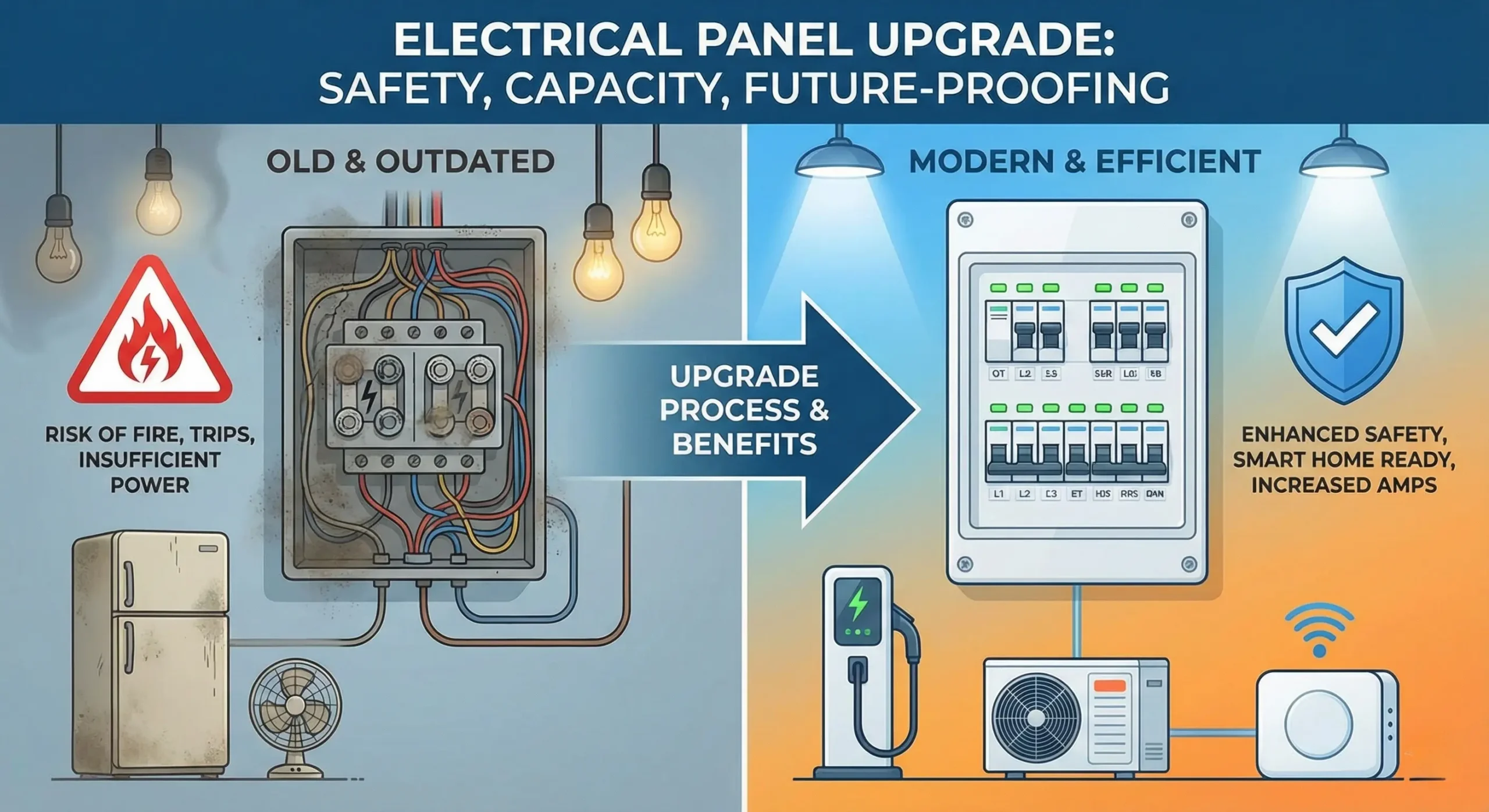
Older homes often have panels that were installed decades ago, sometimes with only 60 or 100 amps of capacity. These panels were sufficient at the time, but with today’s energy demands—including multiple smart devices, high-efficiency HVAC systems, and electric vehicles—many older panels are no longer adequate. Overloaded or outdated panels can pose serious risks, including electrical fires, equipment damage, and property damage.
Safety, capacity, and code compliance are all reasons why upgrading your electrical panel should be a top priority for homeowners and business owners alike.
Signs You Might Need an Electrical Panel Upgrade
Determining whether your electrical panel needs an upgrade doesn’t require guessing. There are clear signs to look for:
- Frequent breaker trips or blown fuses: If your breakers trip regularly when you turn on multiple appliances, it may indicate the panel is overloaded.
- Flickering or dimming lights: This can signal that circuits are struggling to carry the electrical load.
- Warm or buzzing panels: Panels should not feel hot to the touch or produce unusual sounds. These are warnings of potential electrical hazards.
- Old or obsolete equipment: Panels more than 25–30 years old, or those with fuses instead of breakers, are typically outdated.
- Insufficient capacity: Planning to install modern appliances, EV chargers, or backup generators often requires a higher-capacity panel.
- Physical damage or corrosion: Signs of rust, water damage, or double-tapped wires can compromise safety.
For businesses, these signs are equally critical. Commercial buildings often have more complex electrical demands, and outdated panels can disrupt operations, damage equipment, and even violate local electrical codes.
The Benefits of Upgrading Your Electrical Panel
Upgrading your panel is more than just a safety precaution. It has several tangible benefits for homeowners and business owners.
Safety and Peace of Mind
First and foremost, a modern electrical panel significantly reduces the risk of fire and electrical hazards. Old or overloaded panels may fail to trip when needed, potentially leading to fires or electrical shocks. Upgrading ensures that your electrical system has the proper safety mechanisms in place to protect both occupants and property.
Increased Electrical Capacity
A 200-amp panel is now considered standard for most modern homes. Increasing your amperage allows your property to handle high-demand appliances like EV chargers, hot tubs, advanced HVAC systems, and kitchen renovations. For businesses, this means supporting servers, lighting, machinery, and specialized equipment without overloading the system. An upgraded panel ensures that your electrical system can grow with your needs, reducing the need for future upgrades.
Code Compliance
Electrical codes evolve over time to improve safety. An upgrade ensures your system meets current standards, which is essential for inspections, insurance, and resale value. Compliance also reduces liability for homeowners and business owners, as outdated systems may not be covered under insurance policies if they contribute to accidents or damages.
Energy Efficiency and Smart Management
Modern panels can be paired with energy monitoring systems and smart technologies that track usage, balance loads, and reduce energy costs. Some smart panels even allow for integration with solar panels, battery storage, or scheduled heavy-load usage like EV charging. This not only saves money on utility bills but also helps you manage your electrical system efficiently.
Support for Expansion and Future Needs
Whether you’re adding a home addition, secondary suite, or commercial expansion, a new panel provides the foundation to support future electrical demands. Upgrading now prevents costly disruptions or emergency electrical work in the future.
Protecting Equipment and Property
Sensitive electronics, servers, or expensive appliances can be damaged by surges, fluctuations, or overloaded circuits. Modern panels often include surge protection and improved circuit management to safeguard valuable equipment, helping reduce replacement and repair costs.
Understanding the Cost of Electrical Panel Upgrades
One of the most common questions homeowners and business owners have is cost. While costs vary depending on the size of your home, existing electrical infrastructure, and location, industry averages provide a useful benchmark.
Residential Costs
For residential properties, a typical 200-amp panel upgrade ranges between $3,000 to $6,000, depending on factors like:
- Whether the service is overhead or underground
- Age and condition of existing wiring and meter base
- Accessibility of the panel location
- Required permits and inspections
These costs generally include the new panel, breakers, installation, labor, and permit coordination. While the initial investment may seem high, the long-term safety, efficiency, and resale benefits outweigh the upfront expense.
Commercial Costs
Commercial upgrades are often more complex due to larger electrical loads and multiple circuits. Costs can range significantly based on the size of the building, equipment requirements, and code compliance. Despite this, upgrading a commercial panel ensures reliable operation, reduces maintenance costs, and can protect high-value equipment from electrical damage.
The Electrical Panel Upgrade Process
Understanding what happens during an upgrade can help reduce anxiety and plan accordingly. Here’s a typical process:
- Initial Assessment: A licensed electrician evaluates the current panel, wiring, and load requirements. They identify potential hazards and determine the appropriate amperage for your needs.
- Permitting: Before any work begins, permits are obtained to ensure the installation complies with local codes.
- Installation: The electrician replaces the old panel with a new, code-compliant model. This may include additional circuits, surge protection, or other enhancements.
- Inspection: Once installation is complete, an inspection verifies that the panel meets safety standards.
- Testing and Handover: The system is tested, breakers are labeled, and the property owner receives guidance on using the upgraded system safely.
Most residential upgrades can be completed in a single day, though businesses with larger systems may require additional time.
Choosing the Right Electrical Contractor
Hiring a licensed and experienced electrician is critical for a safe and compliant upgrade. Reputable contractors offer:
- Transparent pricing: Clear cost estimates without hidden fees
- Professional installation: High-quality materials and workmanship
- Permit and inspection coordination: Handling all regulatory requirements
- Expert guidance: Recommendations for smart panel upgrades, surge protection, or additional circuits
- Customer service: Respectful, professional, and clean service
Working with a trusted contractor ensures your investment is protected and your electrical system will meet current and future demands.
Conclusion
An electrical panel upgrade is a strategic investment that enhances safety, increases capacity, ensures code compliance, and prepares your home or business for the future. Whether you’re a homeowner dealing with an aging 100-amp panel or a business owner managing high electrical loads, upgrading your panel is essential for modern energy demands.
Beyond safety and functionality, a new panel improves energy efficiency, protects equipment, and increases property value. While costs vary, the long-term benefits of reliability, reduced maintenance, and peace of mind make it a wise decision.
If your electrical system shows signs of strain or you’re planning upgrades that require more power, now is the time to consult a licensed electrician. With the right planning and professional installation, your upgraded panel will provide safe, efficient, and reliable electricity for years to come.