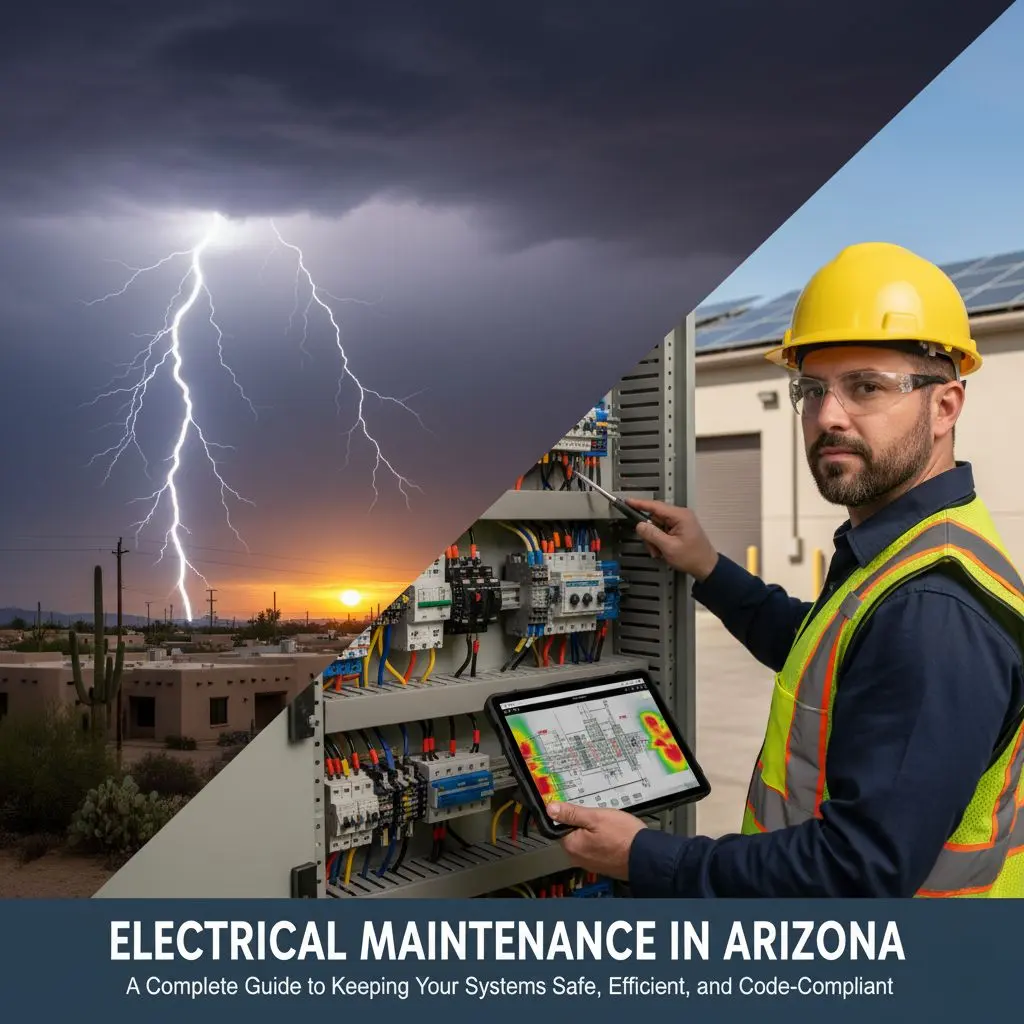
Arizona’s intense desert heat, seasonal monsoon storms, and growing demand for electricity make regular electrical maintenance more important here than almost anywhere else in the U.S. Homes, businesses, and industrial facilities across the state rely on well-maintained systems to stay powered, efficient, and safe through extreme weather and high energy loads.
Whether you live in Phoenix, Tucson, Flagstaff, or a smaller community, understanding when and how to maintain your electrical systems can help prevent outages, reduce costs, and extend the life of your equipment. This guide explores why electrical maintenance matters, how often it should be scheduled, and what Arizona property owners can do to keep their systems compliant and reliable year-round.
Why Electrical Maintenance Matters in Arizona
Electrical systems in Arizona face unique challenges. High temperatures, dust accumulation, and monsoon moisture all strain wiring, breakers, and other components. Without proper upkeep, these conditions can cause corrosion, overheating, and even electrical fires.
1. Preventing Heat-Related Failures
Arizona’s summer temperatures routinely exceed 110°F. That level of heat can accelerate insulation breakdown, dry out wiring, and increase the load on air conditioning systems. Electrical panels exposed to direct sunlight or installed in uncooled garages are especially vulnerable. Regular maintenance helps detect early signs of overheating and ensures all connections are tight, clean, and capable of handling high current safely.
2. Protecting Against Monsoon Damage
Between June and September, monsoon season brings lightning, heavy rains, and sudden power surges. A single strike can damage transformers, wiring, and household electronics. Regular maintenance ensures surge protection devices are functioning properly and grounding systems are intact—critical defenses against Arizona’s frequent summer storms.
3. Reducing Fire Hazards
Electrical malfunctions are a leading cause of structure fires statewide. In Arizona’s arid climate, where vegetation dries quickly, even a small electrical spark can lead to devastating results. Maintenance teams check for frayed wires, loose fittings, and overloaded circuits before they become ignition sources.
4. Improving Energy Efficiency
With Arizona’s energy costs among the highest in the Southwest during summer peaks, efficiency matters. Faulty wiring, worn components, and outdated systems waste electricity. Proper maintenance restores performance, allowing HVAC systems, lighting, and appliances to operate more efficiently—saving residents and business owners money on their monthly bills.
5. Staying Compliant with State and National Codes
Arizona follows the National Electrical Code (NEC) with local amendments in cities such as Phoenix, Mesa, and Scottsdale. Commercial properties are also subject to OSHA and NFPA 70E safety standards. Regular inspections and documented maintenance ensure systems meet these requirements and remain compliant with insurance and fire-safety regulations.
How Often Should Electrical Maintenance Be Done in Arizona?
Because of the state’s harsh conditions, Arizona properties often need more frequent electrical inspections than buildings in milder climates.
Annual Inspections for Most Properties
For most homes and small businesses, a yearly electrical maintenance inspection is the minimum recommendation. This annual visit helps identify damage from dust, heat, or weather exposure. A certified Arizona electrician will typically:
- Inspect and test circuit breakers, fuses, and safety switches
- Check outdoor wiring, panels, and junction boxes for heat or moisture damage
- Tighten all electrical connections
- Verify that surge protection and grounding systems meet current standards
- Test GFCI and AFCI outlets
- Examine HVAC and lighting circuits for overheating
Biannual or Quarterly Inspections for High-Use or Critical Systems
For facilities with heavy electrical demand—such as manufacturing plants, hospitals, data centers, or 24/7 businesses—biannual or quarterly maintenance is strongly advised. The combination of heat, continuous operation, and dust can degrade performance quickly. Regular inspections help ensure uninterrupted power and compliance with commercial insurance requirements.
Event-Driven Maintenance After Storms or Power Surges
In Arizona, electrical systems should also be inspected after specific events:
- After monsoon storms or lightning – to check for surge damage
- Following power outages or voltage spikes – to test backup systems and breakers
- After new installations or remodels – to verify that all circuits meet updated load and safety standards
Event-driven maintenance prevents small problems from compounding into expensive failures.
What’s Included in Professional Electrical Maintenance
Electrical maintenance in Arizona includes both preventive and corrective work aimed at extending system life and ensuring reliability during demanding weather conditions.
Preventive Maintenance
Preventive maintenance is scheduled routinely to identify wear or stress before it causes trouble. It often includes:
- Cleaning dust and debris from panels and ventilation openings
- Checking for corrosion due to humidity or condensation
- Inspecting wiring insulation for heat or rodent damage
- Tightening terminals and connectors affected by temperature expansion
- Measuring circuit loads to prevent overheating
- Testing lighting systems and outdoor electrical fixtures exposed to UV rays
These steps help ensure that electrical systems remain safe and efficient despite Arizona’s climate extremes.
Predictive Maintenance and Smart Monitoring
Many Arizona commercial facilities now use predictive maintenance powered by smart sensors and thermal imaging. These tools detect abnormal heat, vibrations, or power fluctuations long before a component fails. Combined with digital management systems (CMMS), building owners can track performance trends and schedule repairs proactively, minimizing costly downtime.
Corrective Maintenance
If an issue is discovered—such as a failed breaker, burned wire, or damaged outlet—corrective maintenance ensures safe repair or replacement. Documenting each corrective action also provides a history of the system’s health, which can help with warranty claims or insurance documentation.
Electrical Components That Need Regular Attention
In Arizona, certain electrical components require extra care due to local environmental stresses:
- Outdoor lighting and landscape circuits: Constant exposure to sun and heat degrades insulation quickly.
- Pool and spa wiring: Moisture and chlorine increase corrosion risk; inspections are vital for safety.
- Air conditioning units: These high-load systems must be checked for proper wiring and dedicated circuit protection.
- Solar panel connections: Arizona’s strong sunlight benefits solar systems but also subjects them to high heat cycles; electrical connections need periodic tightening and cleaning.
- Main panels and meters: Many are installed outdoors and require sealing and shading to avoid overheating.
Consistent monitoring of these areas ensures performance and safety year-round.
The Electrical Maintenance Process
When an Arizona-licensed electrician performs a maintenance visit, the process usually follows this structure:
- Power Isolation – Circuits are de-energized using lockout/tagout procedures to prevent accidents.
- Visual Inspection – Technicians look for discoloration, corrosion, dust buildup, or rodent damage.
- Testing and Measurement – Voltage, amperage, resistance, and insulation levels are measured to detect irregularities.
- Cleaning and Tightening – Dust and oxidation are removed; all connections are retorqued to manufacturer specifications.
- Component Replacement – Faulty breakers, outlets, or wires are replaced with new parts rated for Arizona’s temperature range.
- Re-energizing and Verification – Power is restored, and the system is tested for stable performance.
- Documentation and Reporting – A report summarizes findings, including recommendations for upgrades or further inspection.
This systematic approach ensures consistency, safety, and compliance.
Using Digital Tools to Manage Maintenance
With Arizona’s mix of residential and commercial development, property owners are increasingly turning to Computerized Maintenance Management Systems (CMMS). These digital platforms help schedule inspections, store reports, and track system performance.
Advantages of CMMS for Arizona Businesses
- Automated scheduling ensures timely maintenance before summer heat peaks.
- Cloud-based storage provides easy access to inspection reports for code enforcement or insurance audits.
- Trend tracking reveals patterns in equipment wear due to heat or dust exposure.
- Faster repairs through real-time alerts when monitored systems detect irregularities.
For large properties like office parks, schools, or manufacturing plants, digital tracking is the most efficient way to maintain compliance and minimize risk.
Safety Precautions for Electrical Work in Arizona
Electrical safety is universal, but Arizona’s conditions demand extra caution. Heat and dryness increase static discharge potential, while monsoon humidity can raise shock risk.
Electricians follow strict standards such as NFPA 70E and OSHA 1910.333 to prevent electrical accidents. Typical safety measures include:
- Wearing insulated gloves, safety glasses, and non-conductive footwear
- Working only on de-energized circuits whenever possible
- Implementing lockout/tagout procedures
- Avoiding maintenance during active storms or wet conditions
- Inspecting tools and test equipment for cracks or corrosion
- Maintaining proper ventilation when working in enclosed Arizona attics or crawl spaces, which can exceed 140°F in summer
These precautions protect technicians and ensure compliance with both state and federal safety requirements.
Signs That It’s Time for Immediate Electrical Maintenance
In Arizona homes or workplaces, the following warning signs indicate that maintenance is overdue:
- Lights flicker or dim when large appliances start
- Breakers trip frequently during summer cooling peaks
- Outlets or switches feel warm to the touch
- A persistent burning smell near panels or wiring
- Outdoor lights fail prematurely due to heat or moisture
- Buzzing or humming noises near circuits
These symptoms often worsen with heat stress. Calling a licensed Arizona electrician immediately can prevent system failure or fire.
The Long-Term Value of Proactive Maintenance
Electrical maintenance isn’t just about avoiding breakdowns—it’s a financial and safety investment. For Arizona property owners, the long-term advantages include:
- Lower electricity bills from improved system efficiency
- Reduced fire risk from overheated or damaged circuits
- Fewer emergency repairs, which are often more expensive in peak summer months
- Longer equipment lifespan, especially for HVAC and solar components
- Compliance documentation for insurance and property resale
- Increased property value from a verified maintenance history
Proactive maintenance aligns with Arizona’s energy-conscious culture, especially as more residents adopt solar power and high-efficiency systems.
Choosing a Licensed Arizona Electrician
Electrical maintenance should always be handled by licensed professionals familiar with Arizona Registrar of Contractors (ROC) requirements. Look for electricians who:
- Hold a valid Arizona electrical contracting license
- Understand local utility interconnection and solar grid regulations
- Provide detailed inspection reports and code references
- Use thermal imaging and advanced testing tools
- Offer preventive maintenance plans tailored to Arizona’s environment
Working with local experts ensures compliance with regional codes and gives you peace of mind knowing your property is protected.
Conclusion: Powering Arizona Safely and Efficiently
In Arizona’s challenging climate, electrical systems endure more stress than most. The combination of extreme heat, dust, and monsoon moisture makes regular maintenance essential. Annual inspections are a must, and high-demand environments benefit from more frequent servicing.
By partnering with a licensed Arizona electrician, implementing preventive maintenance, and using digital tracking tools, you can extend your system’s life, lower energy costs, and maintain safety and compliance across every season. Regular electrical maintenance isn’t just a technical necessity—it’s part of living safely and smartly in the desert.