
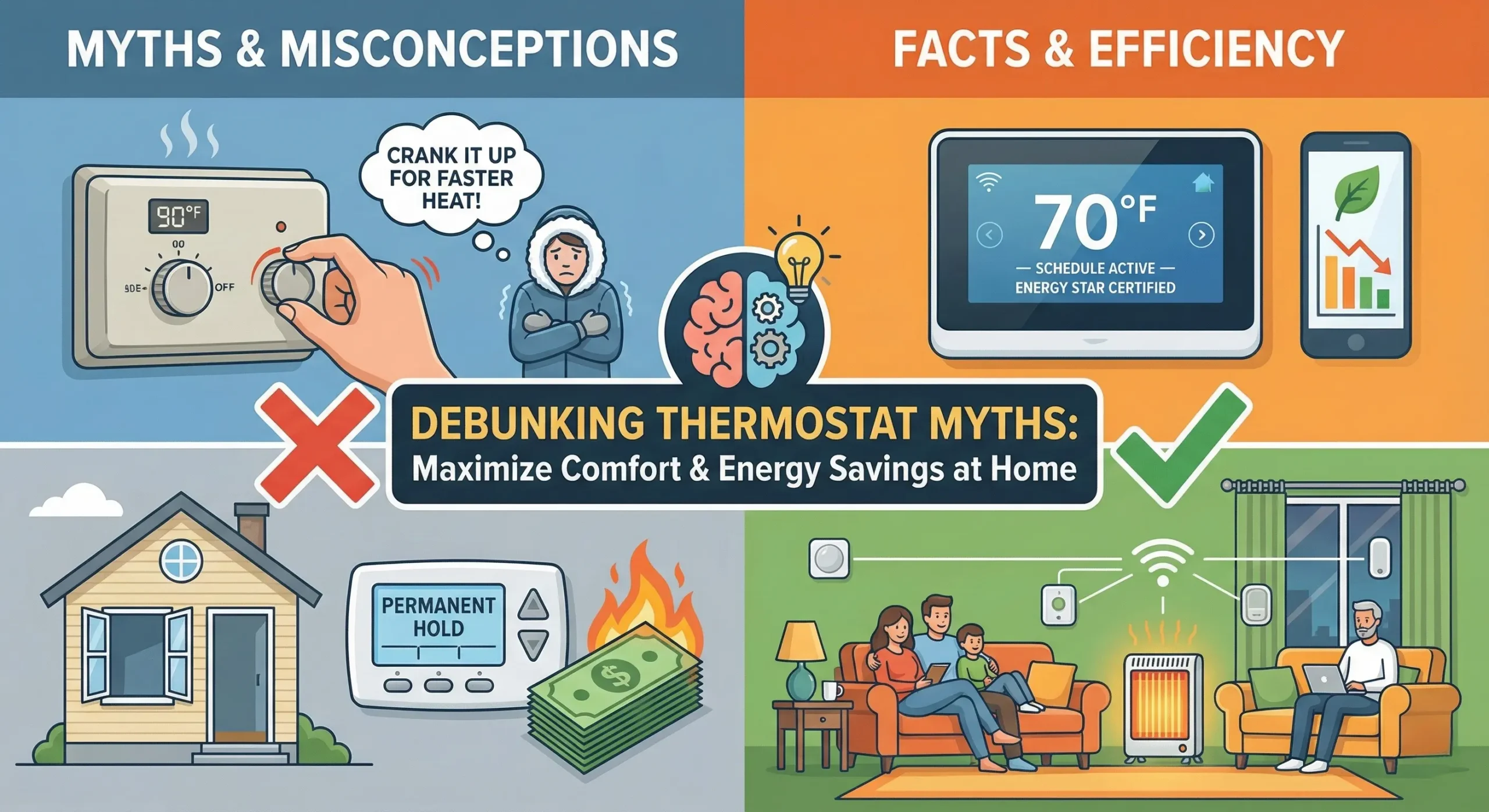
Thermostats are one of the most common devices in homes, yet they are often misunderstood. Whether you have a basic programmable thermostat or a modern smart thermostat, myths abound about how these devices work and how much energy they can save. In reality, many homeowners either overestimate the technology or underutilize it, which can lead to higher energy bills and reduced comfort. In this article, we’ll break down the most common thermostat myths, explain the facts, and give practical advice on how to make your thermostat work efficiently for you.
Understanding Different Types of Thermostats
Before we debunk myths, it’s important to understand that not all thermostats are created equal. There are three main types: manual, programmable, and smart thermostats.
Manual thermostats are simple devices that allow you to set the temperature, but they do not have schedules or connectivity features. You adjust them manually whenever you want the temperature to change.
Programmable thermostats let you set a schedule for your heating and cooling system. This allows for energy savings if you’re away from home during the day or asleep at night. However, a programmable thermostat will only save energy if it is used correctly. Many homeowners leave them in “permanent hold” mode, essentially using them as manual thermostats, which eliminates potential savings.
Smart thermostats take it a step further. They are connected to Wi-Fi and often have learning algorithms that adapt to your habits, optimizing temperature changes automatically. Some can even detect when you leave home using your phone’s location and adjust the temperature to save energy. While smart thermostats can be powerful tools, not every Wi-Fi thermostat qualifies as “smart,” and not all are ENERGY STAR® certified. Certification requires testing and verification to ensure energy efficiency.
Understanding your thermostat type is the first step toward debunking common myths and getting the most out of your system.
Common Thermostat Myths and Facts
Myth 1: Cranking the Thermostat Makes Your Home Heat or Cool Faster
One of the most persistent myths is that turning your thermostat to a higher (in winter) or lower (in summer) setting will make your home reach the desired temperature more quickly. Many homeowners do this out of impatience, thinking it will speed up the process.
Fact: Heating and cooling systems operate at a fixed rate. Setting the thermostat to an extreme temperature does not make the air come out faster or the system work harder in a way that speeds up temperature change. Instead, the system will simply run longer until the set temperature is reached. Overheating or overcooling can waste energy and reduce efficiency.
Myth 2: Programmable Thermostats Automatically Save Energy
Another common misconception is that simply installing a programmable thermostat will lower your energy bills.
Fact: Energy savings depend on how the thermostat is used. If you program a schedule that reduces heating or cooling during periods when the house is empty or everyone is asleep, then you can see significant energy savings. However, if the thermostat is left in permanent hold mode or poorly programmed, it won’t save energy. Smart thermostats can automate this process to some extent, but homeowner behavior is still critical for maximizing savings.
Myth 3: Turning Off Your System Completely Saves More Energy Than Using a Setback
Some homeowners believe that turning off the heating or cooling system completely while they are away is more efficient than lowering or raising the temperature.
Fact: In most cases, it’s more energy-efficient to set back the thermostat rather than turning the system off entirely. When you return home, the system may need to work much harder to restore the temperature, which can negate any savings. Setbacks of a few degrees during absence or at night, combined with gradual temperature adjustments, optimize comfort and reduce energy use.
However, there are exceptions. Homes with heat pumps or systems that rely on emergency heat can see less savings from aggressive setbacks, so it’s important to consider your system type when programming your thermostat.
Myth 4: Thermostat Placement Doesn’t Matter
Many people install thermostats wherever is convenient, assuming location has little effect.
Fact: Thermostat placement is critical for accurate temperature measurement and energy efficiency. A thermostat placed in direct sunlight, near drafty windows, above vents, or next to heat-generating appliances will give incorrect readings. This can cause your HVAC system to run longer than necessary, wasting energy and reducing comfort. Ideally, thermostats should be installed on an interior wall in a frequently used room, away from direct heat sources, sunlight, and drafts.
Myth 5: One Thermostat is Enough for Every Home
Some homeowners assume that a single thermostat can effectively manage temperature in a large or multi-story home.
Fact: Homes with multiple floors or distinct zones can benefit from multiple thermostats or zoning systems. Temperature differences between floors or rooms can cause the system to run inefficiently if controlled by one thermostat. Smart thermostats with remote sensors can also help manage temperature in multiple areas more effectively, providing comfort while saving energy.
Tips to Maximize Thermostat Efficiency
Even the best thermostat can underperform if not used correctly. Here are practical tips for maximizing comfort and savings:
- Use programmable schedules or smart learning features. Set temperature setbacks during sleep and when the house is empty. Smart thermostats can automate these adjustments.
- Avoid extreme temperature settings. Set your thermostat to your desired comfort level rather than overshooting, which wastes energy.
- Regularly review your thermostat settings. Schedules should adapt to changes in your daily routine, seasonal changes, and occupancy patterns.
- Ensure proper thermostat placement. Install on interior walls, away from heat sources, drafts, or sunlight for accurate readings.
- Consider zoning or additional sensors. For larger homes, multiple thermostats or remote sensors ensure that all areas maintain comfortable temperatures without overworking the HVAC system.
Smart Thermostats and Energy Savings
Smart thermostats can offer additional advantages beyond simple scheduling. They can learn your daily routine, adjust temperatures based on occupancy, and even provide detailed energy usage reports. Some models also support geofencing, adjusting your home’s temperature based on your location.
However, smart thermostats are not magic. Their effectiveness depends on proper installation, correct use, and ensuring your HVAC system is running efficiently. A poorly installed or misconfigured smart thermostat will not deliver the expected savings. Some models are also not ENERGY STAR certified, so it’s important to verify certification when choosing a thermostat.
Conclusion
Thermostats are powerful tools for comfort and energy efficiency, but misconceptions can prevent them from reaching their full potential. Cranking the thermostat, leaving programmable models on permanent hold, poor placement, and misunderstanding setbacks are all common mistakes that reduce efficiency.
By understanding the different types of thermostats, debunking myths, and following practical tips, homeowners can maximize energy savings, maintain comfort, and extend the life of their HVAC systems. Smart thermostats, programmable schedules, proper placement, and thoughtful use are all keys to a more efficient home.
Remember, your thermostat doesn’t save energy on its own — you have to use it correctly. Armed with these facts, you can make informed decisions and enjoy a comfortable home without wasting energy.