
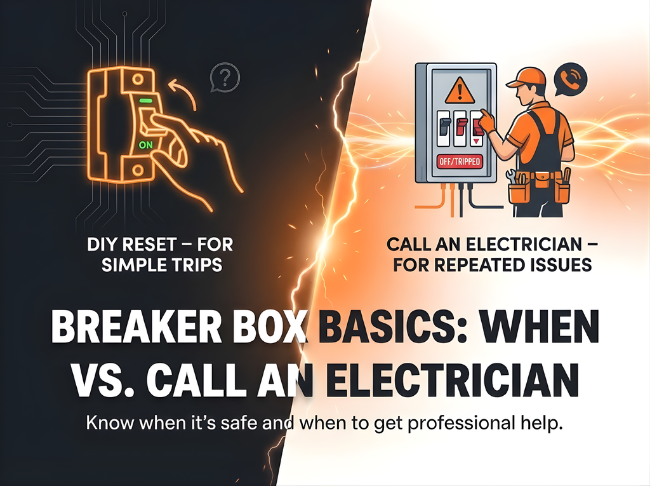
Queen Creek homes hum with air conditioners and pool pumps year-round, putting breakers under constant strain from Arizona’s peak summer loads. Resetting a tripped breaker solves quick overloads like a hair dryer on a bathroom circuit, but repeated pops or burning smells signal wiring faults demanding electrician attention. Knowing the line between safe resets and pro calls prevents shocks, fires, or $10,000 rewires in neighborhoods from Silverhawk to Vineyard.
Main breaker boxes sit in garages or utility rooms, housing 16 to 42 single-pole switches rated 15 or 20 amps that protect branch circuits from shorts or grounds. Desert heat warps plastic covers, loosening connections over decades in pre-2000 builds. Local Pinal County codes require clear access and labeled directories, with inspections flagging unlabeled panels during home sales.
Anatomy of Your Breaker Box Explained
Breakers clip onto bus bars fed from the 200-amp main lugs or meter base, splitting power across two 120-volt legs for balanced loads. Double-pole 240-volt units stack for dryers, ovens, or AC condensers pulling 30 to 50 amps continuously. Arc-fault (AFCI) and ground-fault (GFCI) types monitor bedrooms and kitchens, tripping on silent arcs or water leaks before fires spread through block walls.
Labels mark circuits like “kitchen counters” or “garage door,” but faded ink confuses resets during outages. Queen Creek’s dusty air coats contacts, raising resistance until warm spots form. Voltage tests across legs show 240 volts steady; drops below 230 signal neutral erosion.
Quick Fixes: When Resetting Breakers Works
Single flips from vacuums overloading fridge lines reset easily—power off fully for 30 seconds clears thermal bimetal strips bent by heat. GFCI breakers in bathrooms test monthly via buttons, simulating 5-milliamp leaks without damage. Afternoon AC surges trip window units on shared circuits; unplug peripherals and retry.
Reset three times max per event; firm “on” then “off” positions click audibly. Queen Creek evenings spike usage at 5pm APS peaks, so stagger appliances like ovens after 9pm on time-of-use rates. These handle 90 percent of transient trips without tools.
Reading Breaker Status Like a Pro
Tripped levers sit midway—not fully on or off—glowing red on some models. Warm handles over 110 degrees measured by palm signal internal resistance building to failure. Buzzing boxes trace arcing at clips; flickering lights accompany loose main neutrals.
Double-pole halves tied by handles trip together for imbalanced 240-volt loads like well pumps. AFCI test buttons flash codes: one beep for ground faults, two for arcs from frayed lamp cords.
When Resets Fail: Red Flags for Electricians
Breakers trip instantly on light loads like one bulb, pointing to dead shorts behind walls from rodents chewing Romex. Repeated pops every hour despite unplugged rooms mean ground faults wicking through mortar in block homes. No reset holds over 10 minutes signals welded contacts or bus melts.
Burning odors or scorch marks on doors indicate 5,000-degree arcs igniting insulation. Main breaker failures kill whole-house power, risking utility backfeed during resets. These demand immediate shutoffs at meter and pro diagnostics.
Issue 1: Frequent Tripping on High-Use Circuits
Kitchen 20-amp lines buckle under microwaves plus blenders at 16 amps sustained, exceeding NEC 80 percent rule. Queen Creek families cook dinners amid AC pulls, overloading daisy-chained counters. Resets work short-term, but pros add dedicated circuits or panels with 42 slots.
Voltage sags to 105 volts brown refrigerators slowly; meters confirm during peaks.
Issue 2: AFCI Breakers Popping in Bedrooms
Fans or space heaters arc internally after 500 cycles, fooling bedroom AFCIs into trips. Dusty attics degrade detectors; pros clean or swap compatible models like Siemens QA115AFC. Extension cords mask loads falsely.
Issue 3: GFCI Failures Near Water Sources
Bathroom or outdoor resets fail from moisture tracking along staples pinching wires. Hard water corrodes pins green; sealed pigtails restore paths under 1 ohm. Pool GFCIs demand 6-milliamp sensitivity for swimmer safety.
Issue 4: Double-Pole Trips for 240-Volt Appliances
Dryers store charge in capacitors, shocking post-trip; discharge tools bleed safely. Undersized feeders melt insulation on long garage runs; 6-gauge copper handles 50 amps drops under 3 percent voltage.
Issue 5: Main Breaker or Panel Overloads
100-amp services choke on EVs plus minisplits pulling 80 amps peak. Warm bus bars exceed 140 degrees; infrared scans spot before fires. Upgrades to 400 amps space future-proof additions like hot tubs.
Issue 6: Half-House Power Loss on Multi-Leg Panels
One leg fails from loose lug torque, blacking bedrooms while kitchens stay live. Load balancing shifts 20 amps across phases; pros megger insulation at 1,000 volts for pinholes.
Safe Reset Steps for Queen Creek Homeowners
Unplug all loads on the circuit first, checking labels or plugging lamps room-by-room. Flip main off first for safety, waiting two minutes for capacitors. Use flashlight at night; never force levers or pry with screwdrivers conducting shocks.
Test post-reset with hair dryers drawing 12 amps steady; monitor 30 minutes. Log trips in notebooks, noting time, loads, and weather for patterns.
Tools That Help Without Risking Shocks
Three-light outlet testers verify polarity post-reset; non-contact wands beep live wires safely. Clamp meters measure amps without touching blades, spotting 18-amp kitchen draws. Apps like Voltage Detector log remotely via Bluetooth probes.
Queen Creek Codes and Inspection Realities
Pinal mandates AFCI everywhere but garages since 2017; unlabeled panels fail sales. Permits accompany panel swaps, documenting for insurance cuts. Dusty covers void tamper seals; annual wipes prevent shorts.
Calling Electricians: What Pros Bring
Oscilloscopes graph waveforms, confirming clean sines post-fix. Thermal imaging catches 15-degree hotspots invisibly. Load banks simulate 150 percent peaks, verifying stability.
Local teams stock Murray or Square D breakers, torqueing to 50 inch-pounds factory spec. Diagnostics cost $125, full panels $3,000 installed with five-year warranties. Same-day service from Ellsworth to Power Road.
Preventive Maintenance for Breaker Reliability
Tighten lugs yearly to spec; vacuum dust pre-monsoon. Balance loads under 80 amps per leg; subpanels split garages. Surge protectors at mains clamp spikes frying electronics.
Conclusion
Breaker resets handle overload hiccups in Queen Creek homes, but trips repeating or smelling hot demand electrician intervention to avert wiring meltdowns. Quick tests and safe habits catch most issues early, while pros deliver thermal scans and torque perfection for lasting power. Know your box, reset smartly, and call experts when doubt hits—reliable breakers keep families lit through every storm.