
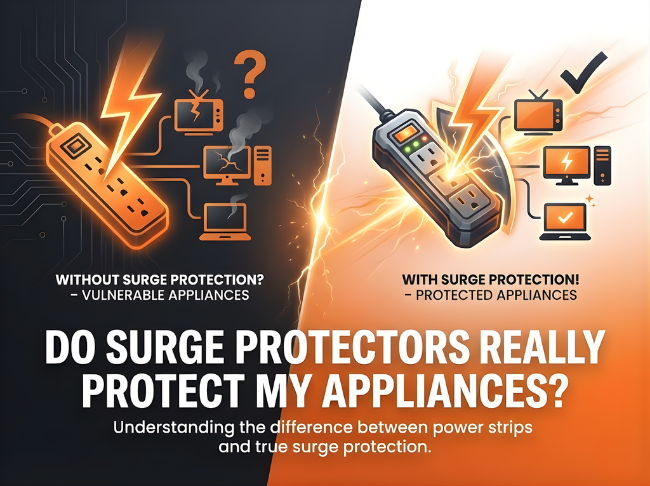
Queen Creek homeowners plug surge protectors into every outlet during monsoon season, hoping to shield TVs, refrigerators, and computers from lightning spikes that black out the neighborhood. These devices clamp excess voltage to save thousands in repairs, but cheap models fail fast against Arizona’s brutal 50,000-amp strikes. Understanding real protection versus marketing hype keeps appliances running through haboobs and grid glitches in homes from Encanterra to San Tan Ranch.
Power strips with flimsy lights claim defense, but only whole-home units at the panel handle full surges traveling miles through APS lines. Desert storms pack multiple hits per minute, overwhelming point-of-use plugs that sacrifice themselves on first contact. Professionals install robust systems meeting local codes, ensuring insurance discounts and peace during outages.
How Surge Protectors Actually Work
Surge protectors use metal oxide varistors (MOVs) that conduct at 330-600 volts, shunting excess to ground instead of frying circuits rated 120 volts nominal. They absorb joules—energy units measured in thousands—before degrading, with indicators showing green when alive. Queen Creek’s long feeders from substations amplify spikes 10 times, demanding high joule ratings over 100,000 for homes.
Point-of-use strips guard single devices, clamping milliseconds after spikes hit. Whole-home protectors at breakers intercept before branches, protecting washers in garages alongside laptops. Interposing reactors filter noise, smoothing sine waves distorted by inverters nearby.
Limits of Plug-In Surge Protectors
$10 strips from big box stores rate 900 joules, sacrificing MOVs on minor events like fridge startups drawing 40-volt jumps. Clamping voltage sits 400+, passing damage to sensitive electronics needing 180-volt max. Daisy-chaining overloads them, as total surge splits unevenly across outlets.
LED TVs die from remnants after strips sacrifice, with capacitors popping from residual energy. Queen Creek’s hard water corrodes grounds yearly, weakening paths MOVs need. Response times lag 25 nanoseconds versus lightning’s 1.2-microsecond rise, letting peaks through.
Why Whole-Home Surge Protection Wins
Panels mount Type 1 or 2 protectors directly on buses, absorbing 80,000-200,000 joules before wiring sees spikes. Siemens or Eaton models disconnect automatically post-failure, avoiding fire from shorted MOVs. Costs run $400 to $800 installed on 200-amp services, slashing insurance 10 percent with certificates.
They cover every outlet instantly, vital when storms hit refrigerators cycling compressors. NEMA remote indicators flash red across townhouses, signaling swaps before blackouts strand families. Hybrid gas discharge tubes handle 100kA modes, resetting unlike one-shot MOVs.
Real-World Failures and Warning Signs
Indicators fade green to off after cumulative hits, leaving silent vulnerability. Burning plastic smells mean MOVs welded on, conducting constantly. Plugged appliances reset randomly from noise passed through degraded units.
Post-monsoon tests plug hair dryers into every outlet, watching for pops or dimming. Insurance claims spike 30 percent in July, often tracing to expired protectors ignored during winter. Queen Creek’s grid brownouts compound surges, frying power supplies incrementally.
Appliance Vulnerabilities Surge Protectors Miss
Direct lightning strikes overwhelm any protector, vaporizing MOVs at 1 million volts. Internal appliance surges from motors starting generate internal spikes ignored by plugs downstream. Common mode noise travels on both hot and neutral, needing filters across lines.
Refrigerators with digital displays fail from accumulated micro-surges, costing $1,200. Computers need UPS batteries buffering seconds, as protectors drop voltage instantly without smoothing. Pool pumps seize from phase imbalances post-event.
Choosing Protectors That Deliver in Arizona
Seek UL 1449 ratings with 50kA per phase minimum for Queen Creek’s storm density. Joule ratings over 60,000 sustain multiple seasons; sub-2,000 volt clamping voltage shields 90 percent of threats. Whole-home pairs with point-of-use for layered defense, catching what panels miss.
Intertek ETL marks verify independent tests; avoid CE stickers hiding low standards. Lifespan hits three to five years here, shorter than humid climates from heat-accelerated aging.
Testing Your Surge Protection Effectiveness
Breakers stay set post-storm, but multimeters show clipping at 135 volts max on simulated loads. Surge counters log events, resetting yearly. Appliance meters track anomalies, correlating with local lightning maps.
Pros use oscilloscopes graphing before-after waves, confirming flat tops under 150 volts. Annual inspections torque grounds, replace failed units during panel service.
Boosting Protection Beyond Basic Protectors
Whole-home hybrids add avalanche diodes for sub-nanosecond response, surviving 20 strikes. UPS systems with AVR stabilize sags alongside spikes, essential for modems during outages. Faraday cages shield antennas, blocking induced surges.
Generator interlocks pair with protectors, clamping transfer switch transients. Smart panels monitor real-time, texting alerts for action.
Queen Creek-Specific Surge Realities
Haboobs pack 20 strikes per square mile, traveling via 100-mile lines to overload strips. APS transformers step down but ring with resonance, doubling peaks. Monsoon peaks hit 7pm peaks, coinciding with AC loads amplifying inrush.
Local installers stock NEMA 4X enclosures for dusty garages, IP65 sealing out sand. Permits breeze through for panels, documenting for 15 percent insurance cuts.
Costs Versus Savings from True Protection
Basic strips cost $20 yearly replaced, but $5,000 TV repairs dwarf savings. Whole-home pays 70 percent ROI first storm, preventing $15,000 claims yearly. Rebates through APS cover $100 on qualified units.
Financing spreads $600 installs monthly, warranties hit 10 years transferable at sale.
When to Call Local Electrical Experts
Dead indicators, buzzing boxes, or appliance trips post-rain demand diagnostics. Pros swap MOV modules without full panel pulls, testing under 10kV simulated hits. Serving from Power to Ellsworth, 90-minute emergencies restore confidence.
Free audits map needs, bundling with LED swaps for efficiency.
Conclusion
Surge protectors shield Queen Creek appliances when rated high, installed at panels, and maintained through brutal seasons—cheap plugs sacrifice without stopping threats. Whole-home systems deliver reliable defense against lightning and grid chaos, saving thousands over strip failures. Test yearly and upgrade to layers that outlast storms, keeping power steady for families no matter the weather. Real protection powers peace of mind.