
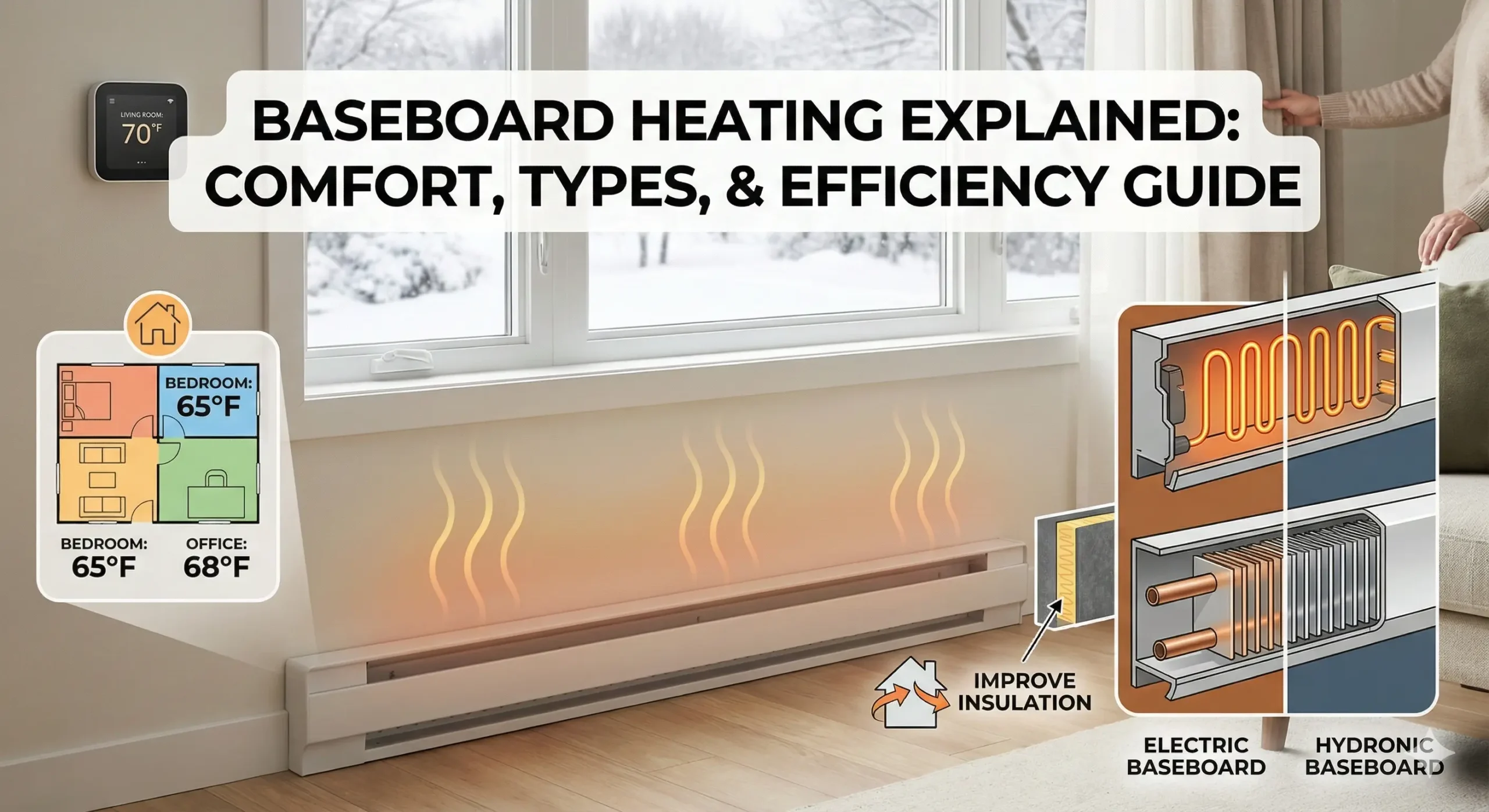
Baseboard heating is one of those systems many homeowners live with for years without fully understanding. It often comes standard in older homes, condos, and apartments, especially in colder climates. Some people love it for its quiet operation and room-by-room control, while others worry about energy costs or uneven heat. The reality is that baseboard heating can be very effective when it’s properly set up, maintained, and paired with good insulation and smart heat-management habits.
This guide pulls together everything you need to know about baseboard heating in one place. We’ll cover how baseboard heating works, the difference between electric and hydronic systems, the real pros and cons, and practical ways to improve comfort and efficiency. We’ll also look at a common challenge many homeowners face: insulating walls when baseboard heaters are already installed.
If you’re trying to decide whether baseboard heating is right for your home—or how to make your existing system work better—this article is designed to give you clear, useful answers without filler.
What Is Baseboard Heating and How Does It Work?
Baseboard heating is a space-heating method that delivers warmth along the bottom of your walls, usually on exterior walls or beneath windows. Instead of blowing warm air through ducts, baseboard heaters rely on convection. As air near the heater warms up, it rises into the room, while cooler air is pulled in at floor level to be heated next. This natural circulation creates steady, even warmth without fans or blowers.
Because heat is introduced around the perimeter of a room, baseboard heating is effective at offsetting cold drafts that enter through windows and exterior walls. This is why baseboard heaters are commonly installed directly under windows or along outside walls.
Another defining feature of baseboard heating is zoning. Most systems allow each room or area to be controlled independently, either with individual thermostats or valves. That means you can heat only the rooms you’re using instead of warming the entire house all at once.
Types of Baseboard Heating Systems
There are two main types of baseboard heating systems, and understanding the difference is essential when evaluating costs, efficiency, and long-term performance.
Electric Baseboard Heating
Electric baseboard heaters use electrical resistance to generate heat. When electricity flows through internal heating elements, those elements warm up and heat the surrounding air.
Electric baseboard systems are often found in apartments, condos, and homes without ductwork or boilers. They are relatively simple systems with few moving parts.
Key characteristics of electric baseboard heating include:
- Heat is generated directly at the heater, with no central furnace or boiler.
- Each heater is typically controlled by its own thermostat or wall control.
- Installation is usually simpler and less expensive upfront than hydronic systems.
Because electric baseboard heaters convert electricity directly into heat, they are nearly 100% efficient at the point of use. However, operating costs depend heavily on local electricity rates.
Hydronic (Hot Water) Baseboard Heating
Hydronic baseboard heating systems use hot water to deliver heat. A boiler heats water, which is then circulated through pipes running inside the baseboard units. As the hot water passes through, it warms the metal fins and enclosure, heating the surrounding air.
Hydronic systems are more common in single-family homes and older properties with central boilers.
Important features of hydronic baseboard heating include:
- Heat comes from a central boiler rather than individual electric elements.
- The system provides more consistent and longer-lasting warmth, even after the boiler cycles off.
- Installation is more complex and typically more expensive upfront.
Hydronic baseboard heating is often considered more efficient and comfortable over time, especially in colder climates, because water retains heat better than air or electric elements.
The Advantages of Baseboard Heating
Baseboard heating remains popular for good reasons. When used correctly, it offers several practical benefits.
One major advantage is quiet operation. Since there are no fans or blowers, baseboard heating runs silently. This makes it ideal for bedrooms, offices, and living spaces where noise can be distracting.
Another benefit is zoned heating. Each room can be controlled separately, allowing you to reduce heat in unused areas and focus warmth where it’s needed. This level of control can lead to meaningful energy savings, especially in homes where rooms are used at different times of day.
Baseboard heating also provides consistent comfort. Because heat rises gently from floor level, rooms tend to feel evenly warmed without the temperature swings that sometimes occur with forced-air systems.
From a design perspective, baseboard heaters are relatively low-profile. While they do take up wall space, they don’t require bulky ductwork, ceiling vents, or mechanical rooms.
The Downsides of Baseboard Heating
Despite its benefits, baseboard heating is not without drawbacks. Understanding these limitations can help you avoid common frustrations.
Operating cost is one of the most common concerns, particularly with electric baseboard heating. In areas with high electricity prices, running electric baseboards can be expensive during long winters.
Another issue is wall space. Baseboard heaters limit furniture placement and décor options, since covering or blocking them can reduce efficiency and pose safety risks.
Baseboard systems are also heating-only solutions. Unlike heat pumps or forced-air systems, they do not provide cooling. Homes with baseboard heating often rely on separate air-conditioning units or window ACs in warmer months.
Response time can be slower as well. Baseboard heaters warm spaces gradually, which means rooms may take longer to reach a comfortable temperature compared to systems that blow hot air quickly.
Electric Baseboard Heating: Pros and Cons in Real-World Use
Electric baseboard heating deserves special attention because it’s widely used and often misunderstood.
Pros of Electric Baseboard Heating
Electric baseboard heaters are simple and reliable. With no pumps, boilers, or ductwork, there are fewer components that can fail. This makes maintenance minimal compared to other heating systems.
They also offer excellent zoning potential. Each heater can be controlled independently, making it easy to customize comfort room by room.
When paired with modern programmable or smart thermostats, electric baseboard heating becomes much more efficient. Scheduling, occupancy detection, and remote control allow homeowners to reduce heating when rooms are empty and warm them only when needed.
Electric baseboards are also easy to install, making them a practical option for additions, renovations, or homes without existing heating infrastructure.
Cons of Electric Baseboard Heating
The biggest drawback is cost. Electricity is often more expensive than natural gas or other fuels, which can lead to higher monthly bills during winter.
Electric baseboard heaters can struggle to heat very large or open-concept spaces efficiently. They work best in smaller rooms or well-insulated areas.
Aesthetics can also be a concern. While modern designs are cleaner than older models, baseboard heaters are still visible and can clash with certain interior styles.
Finally, electric baseboard heating does not store heat. Once the heater turns off, warmth dissipates quickly, unlike hydronic systems that continue radiating heat from hot water in the pipes.
How to Improve Comfort and Efficiency With Baseboard Heating
Whether you have electric or hydronic baseboard heating, small changes can make a noticeable difference in comfort and energy use.
Use Smart or Programmable Thermostats
Thermostat control is one of the most effective ways to improve baseboard heating performance. Programmable and smart thermostats allow you to set schedules that match your daily routine.
Lowering the temperature while you sleep or when you’re away from home can significantly reduce energy use. Smart thermostats take this further by learning your habits, offering remote control through mobile apps, and adjusting automatically based on occupancy.
Keep Baseboard Heaters Clean and Clear
Dust and debris can reduce heat output by blocking airflow. Regularly vacuuming inside and around baseboard heaters helps maintain efficiency.
Furniture, curtains, and rugs should not block baseboard heaters. Obstructions trap heat and prevent proper air circulation, making the system work harder than necessary.
Seal Drafts and Improve Insulation
Heat loss through windows, doors, and poorly insulated walls forces baseboard heaters to run longer. Sealing gaps with weatherstripping and caulking can dramatically improve comfort.
Window coverings also matter. Opening curtains during sunny winter days allows natural heat to enter, while closing them at night reduces heat loss.
Focus Heat Where You Need It
Zoned heating works best when you take advantage of it. Closing doors to unused rooms and lowering their thermostats allows your system to focus on occupied spaces.
This approach not only saves energy but also improves comfort where you spend the most time.
Insulating Walls When Baseboard Heaters Are Already Installed
One of the most common challenges with baseboard heating appears during renovations or energy upgrades. Many older homes, especially those built in the 1960s and 1970s, have baseboard heaters installed along exterior walls that lack modern insulation.
Why This Is a Problem
Baseboard heaters are often mounted directly in front of exterior walls, which makes insulating those walls more complicated. If insulation is missing or inadequate behind the heaters, a significant amount of heat can be lost to the outdoors.
This reduces efficiency and increases heating costs, even if the heaters themselves are working properly.
Best Practice: Temporary Removal
The most effective solution is to temporarily remove the baseboard heaters, insulate the wall properly, and then reinstall the heaters.
This allows for:
- Continuous insulation behind the heater
- Proper air sealing
- Correct placement of vapor barriers in cold climates
While this approach requires more labor and planning, it delivers the best long-term results, especially in homes undergoing major renovations.
Insulation Strategies Behind Baseboards
Rigid foam insulation boards are often used behind baseboard heaters because they provide continuous insulation and reduce thermal bridging. These boards can be combined with cavity insulation such as fiberglass or mineral wool to achieve higher overall R-values.
In cold climates, vapor barriers should be placed on the warm-in-winter side of the wall to prevent moisture problems.
Any combustible insulation materials must be protected with drywall or other approved barriers to meet fire safety codes.
When Full Removal Isn’t Possible
If removing baseboard heaters isn’t practical, partial improvements can still help. Adding rigid foam where accessible, sealing gaps, and improving insulation in other parts of the wall can reduce heat loss, even if the solution isn’t perfect.
In these cases, consulting a professional is often worthwhile, especially for hydronic systems that involve plumbing connections.
Baseboard Heating vs Other Heating Systems
Baseboard heating is just one option among many. Understanding how it compares to other systems can help you make informed decisions.
Compared to forced-air heating, baseboard systems are quieter and offer better zoning, but they lack cooling capability and air filtration.
Compared to radiant floor heating, baseboard heaters are less expensive to install but don’t provide the same level of whole-floor comfort.
Compared to heat pumps, baseboard heating is simpler but often less energy-efficient, especially in milder climates where heat pumps excel.
Each system has strengths and weaknesses, and the best choice depends on your home, climate, budget, and comfort preferences.
Is Baseboard Heating Right for Your Home?
Baseboard heating works best in well-insulated homes where room-by-room control is valued. It’s particularly effective in colder regions and in homes without existing ductwork.
Electric baseboard heating can be a practical solution for smaller spaces, apartments, and additions, especially when paired with modern thermostats and good insulation.
Hydronic baseboard heating is often a strong long-term choice for whole-home heating in cold climates, offering steady warmth and efficient operation when paired with a high-efficiency boiler.
If you already have baseboard heating, improving insulation, sealing drafts, and upgrading controls can dramatically improve performance without replacing the entire system.
Final Thoughts
Baseboard heating is often underestimated. While it may not be the newest or flashiest heating option, it remains a reliable and effective way to heat many homes. When properly installed, insulated, and controlled, baseboard heating can deliver quiet comfort, flexible zoning, and consistent warmth throughout the winter.
Understanding how your system works—and how your home’s insulation and layout affect it—puts you in control of both comfort and energy costs. Whether you’re upgrading an older home, managing electric baseboards in an apartment, or optimizing a hydronic system, informed choices make all the difference.
With the right setup and smart adjustments, baseboard heating can continue to be a practical and comfortable solution for years to come.